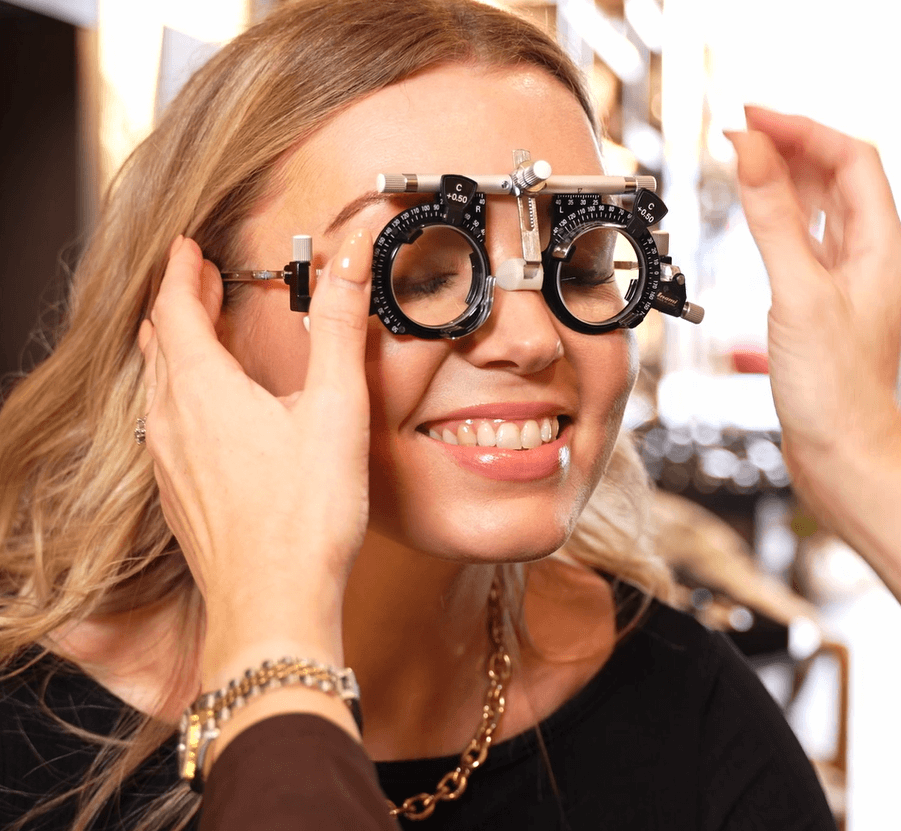
Most people think of an eye test as a way to check whether they need glasses. It is — but that is only a small part of it. A thorough examination is also one of the simplest ways to protect your long-term eye health, and to catch the conditions that give no early warning of their own.
The general rule — and its exceptions
For most healthy adults, an eye examination every two years is the sensible baseline. But "every two years" is a starting point, not a rule for everyone. Several groups should be seen more often — usually annually — because their eyes change faster or carry a higher risk of conditions that benefit from early detection.
- Children and teenagers, whose vision changes quickly as they grow
- Anyone aged 60 and over
- People with diabetes or high blood pressure
- Those with a family history of glaucoma or macular degeneration
- Contact lens wearers, who need their eye health monitored more closely
If you are in one of these groups, your optometrist will recommend the right interval for you — and in many cases an NHS-funded test will cover it.

The signs you should not wait for
Booking sooner is always wise if you notice headaches around screen work, tired or strained eyes by the end of the day, difficulty driving at night, or print that needs to be held further away than it used to. Sudden changes — flashes, floaters, a shadow across your vision or any abrupt loss of sight — should always be treated as urgent.
Why the gap matters
Many of the most serious eye conditions develop slowly and painlessly. Glaucoma, for example, can quietly affect your peripheral vision for years before you notice. A regular examination — particularly one that includes advanced imaging — lets us see change over time and act early, while there is the most to gain. That is the real value of a test: not the prescription, but the picture of your health it builds, appointment after appointment.
We would rather understand your eyes properly than rush you through a chart. That takes a little more time — and it is time well spent.← Back to the Journal